
One Plus One = Three
Lincoln Park Gets a Real Deal Neighborhood Bistro and A Vinyl-Record-Spinning Steakhouse (open July 1st) from the Chef behind Bistro Monadnock and a Pair of Creative Sibling Entrepreneurs
Editors Note: Lisa Shames is back at The Hunger, this time with a restaurant opening profile. In addition to the usual reviews and essays, I’ve had a goal of doing more Chicago restaurant news and openings. If you want more of this stuff, let me know. The best way to do so is by supporting our work with a paid subscription. For those of you who already do, we appreciate you so much.
—Mike Nagrant
Before it closed in 2023, Beaumont Bar & Grill had an impressive 43-year run. While the Lincoln Park tavern on Halsted Street just north of Armitage Avenue served food and attracted a sports-loving crowd early in the evening, the big draw for the young neighborhood folks and beyond who frequented it was its 4 a.m. liquor license.
“Well, that’s a lot of people’s recollection of it,” says Paul Abu-Taleb, who admits to his own late-night visits to Beaumont back in the day.
In 2024, Abu-Taleb, along with his brother, John, bought the building that once housed Beaumont. The duo is also behind Pilsen Yards and The Alderman, an intimate cocktail lounge tucked inside it. For the last two years, they, along with an army of construction workers, electricians, plumbers and craftsmen, have transformed the 135-year-old building into the classic neighborhood restaurant of their dreams.
Opened in late May, Beaumont, at 2020 N. Halsted St., is a 200-seat tavern-driven American restaurant. Upstairs is The Bull Moose, a boutique steakhouse that will debut on July 1st. Heading up the kitchen for both restaurants is executive chef Johnny Besch, who most recently was at the Loop’s Bistro Monadnock and the West Loop’s BLVD Steakhouse before that.
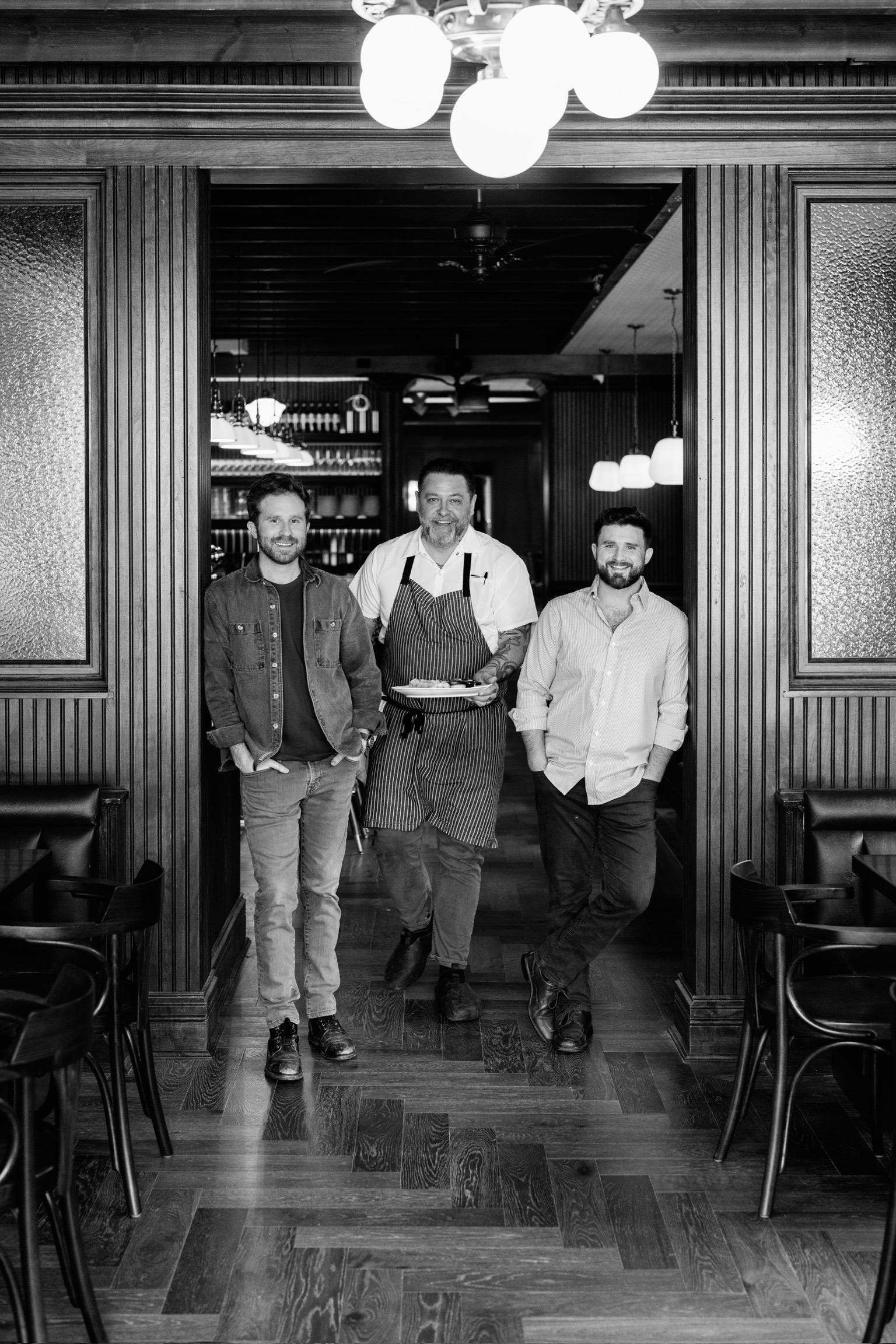
Originally built in 1890, the double-wide storefront with apartments on its second and third floors needed work. A lot of work. “We only left the exterior brick and wood,” says Abu-Taleb, adding that they went down to the joists and ripped out half of those. He believes the state of the building was one of the reasons they were able to take on this project. “It was terrifying to anybody who walked in.”
But not to Abu-Taleb and his brother. “I think the more you work on a building, probably the better the outcome will be,” he says. This was their fifth build-out, albeit the most complicated in scope and roadblocks.
“A lot of people were like, ‘Knock it down,’” he says. “But we love old buildings and it takes 130 years to get character and brick like that.” The end result is what the brothers were hoping for. “A lot of people have walked in and said exactly what we were trying to accomplish, which is that it feels like it’s been here for a long time.”
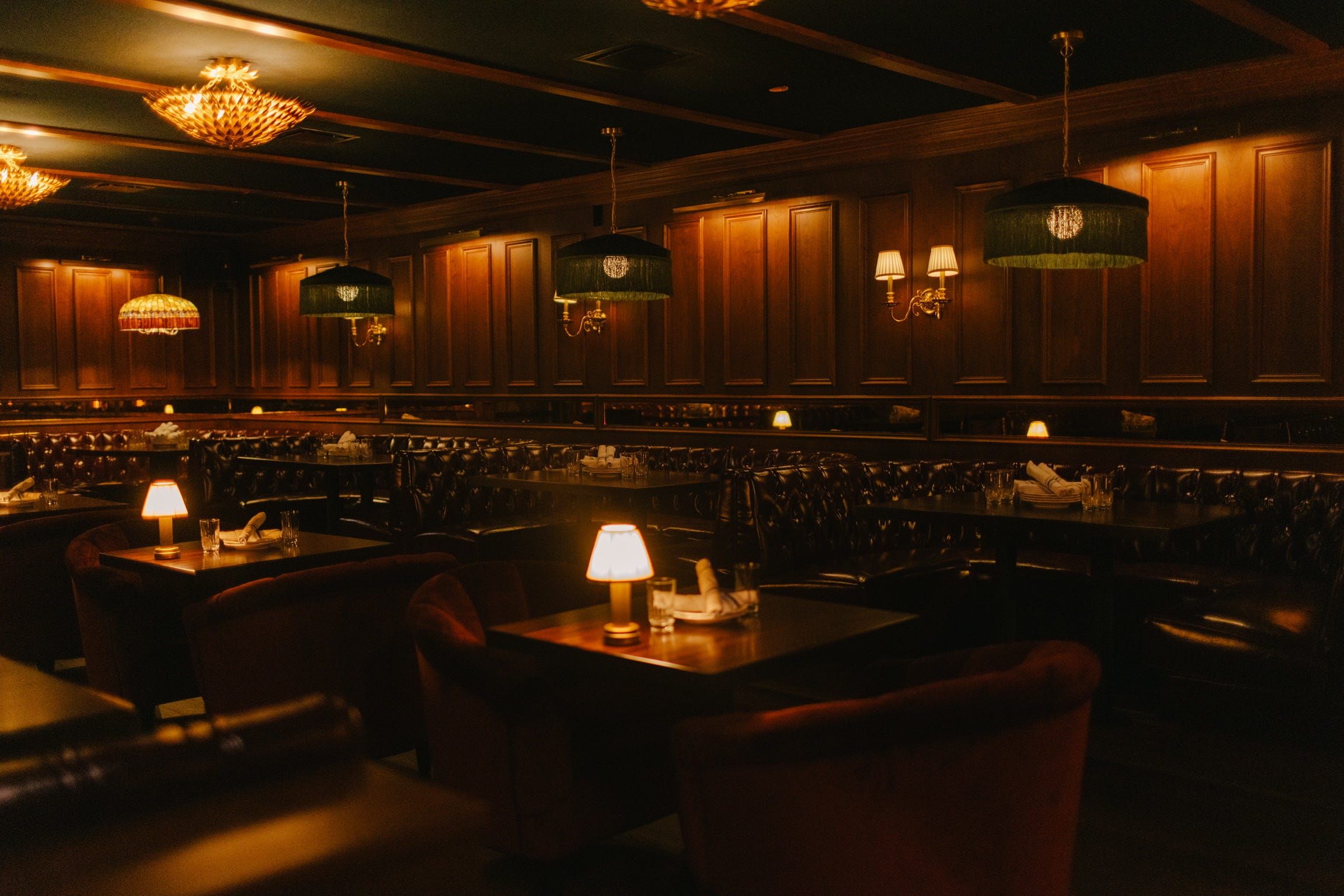
One needed change was making the building ADA accessible as most of the storefronts on Halsted created back then were elevated from the sidewalk by a few steps. That ended up giving them flexibility in the layout of the space, including having walk-in refrigerators and prep space in the basement, allowing for more seating in the restaurant. “It was important for us to be able to build a big enough restaurant that has a seat count that can support the investment that is required,” says Abu-Taleb.
Another vital addition was the large 33-seat bar dominating the front room. “We thought the square bar was really critical to the energy of the space because more than anything, we’re trying to create a space for the neighborhood more than necessarily a restaurant for the neighborhood,” says Abu-Taleb.
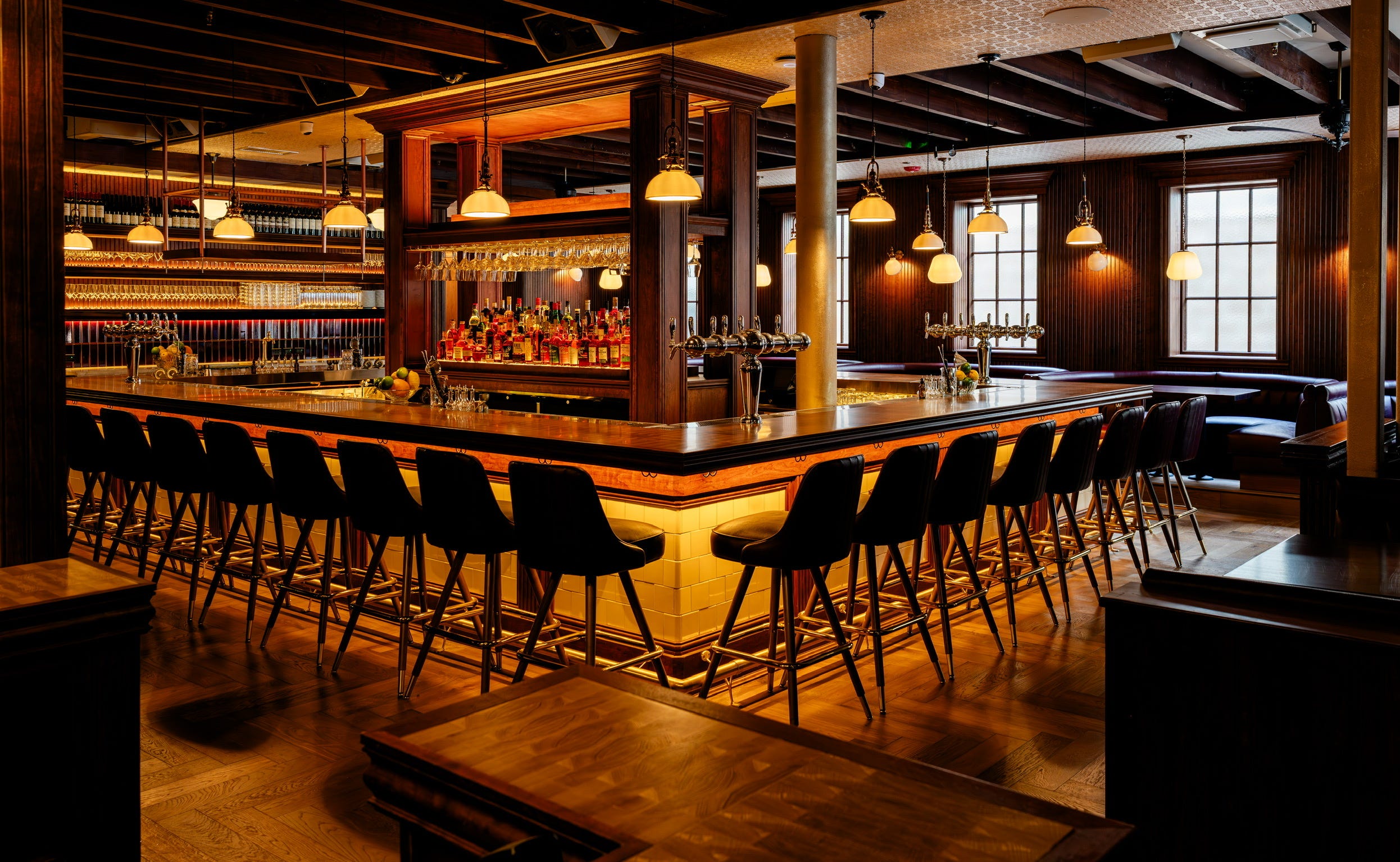
Surrounding the bar are expansive half-circle leather booths. And everywhere is wood — on the floor, walls, tables, the bar top and ceiling — along with beautiful millwork, including around the recessed windows. Above, eye-catching light fixtures imbue the room, and those in it, with a soft, warm glow.
It’s a similar vibe in the main dining room, formerly the original Beaumont’s dance floor, just beyond the bar and lounge. Here, skylights can be automatically opened and closed depending on the desired vibe.
Between the two spaces is a long service station accented with shiny deep-red tiles echoing the rich color of the nearby booths and barstools. “People were like, ‘It’s going to be noisy and loud with glasses clanking and people polishing them,’” says Besch. “I’m like, ‘Yeah, exactly.’ When you walk in at 4 p.m. on a Friday and you’re the first guest at the bar, there’s action. It creates a bit of energy that otherwise would not exist in that section of the bar.”
The kitchen at Beaumont’s has plenty of energy of its own. There’s a nine-foot section of live-fire charcoal ovens, including a Josper grill imported from Spain that Besch saw on a trip to Barcelona and knew he had to have. The kitchen features five main stations, including ones for pasta, grilling, sautéing, frying and shucking oysters. A large stockpot — “the stockpot to end all stockpots,” says Besch, proudly — commands some square footage of its own and will be busy making Besch’s signature French onion soup. Downstairs is a walk-in dry-ager and a band saw for the steaks they will be butchering in-house for The Bull Moose.
“We had this opportunity to build a showstopper of a kitchen,” says Besch.
And with all the made-in-house ingredients, ranging from two kinds of bread (Parker House rolls and 48-hour focaccia) and pastas to house-churned butter — “Justin Kilgus [of Kilgus Farmstead] raises the best Jersey dairy cows, and they produce the best cream you can find around here and so it was kind of like a why-not question,” says Besch — he and his team are going to get plenty of use out of it.
For the overall approach to Beaumont’s menu, Besch followed the lead of the space itself in that it offers a variety of entry points. “People ask me all the time what’s good on the menu and obviously I’m biased but it’s kind of how you feel for the night,” he says.
Focusing on approachability and price points was key, along with creating a menu with dishes folks would want to eat on a routine basis. “The concept is rooted in timeless classics,” says Abu-Taleb. “Johnny and I have this similar orientation toward restaurants, which isn’t to just create for creation’s sake.”
There’s the coal-roasted rainbow trout paired with an absinthe cream sauce and topped with shaved fennel and herbs. The shrimp and grits features a Spence Farms grits cake paired with smoked ham hock, prawns and creamed sherry and topped with caramelized raclette cheese. “It eats very Southern and French Creole, so there’s that through-line back to my cooking pedigree of mostly French cuisine,” says Besch.
Brussels sprouts detour from ho-hum territory with the addition of garlic aioli, fermented hot honey and fresh lime juice for acidity. Bits of charcoal-roasted hazelnuts add additional texture.
Other dishes include escargot in puff pastry, vodka radiatore pasta with pork and lamb sausage, Amish chicken with black truffle bordelaise and a wedge salad with smoked bleu cheese dressing.
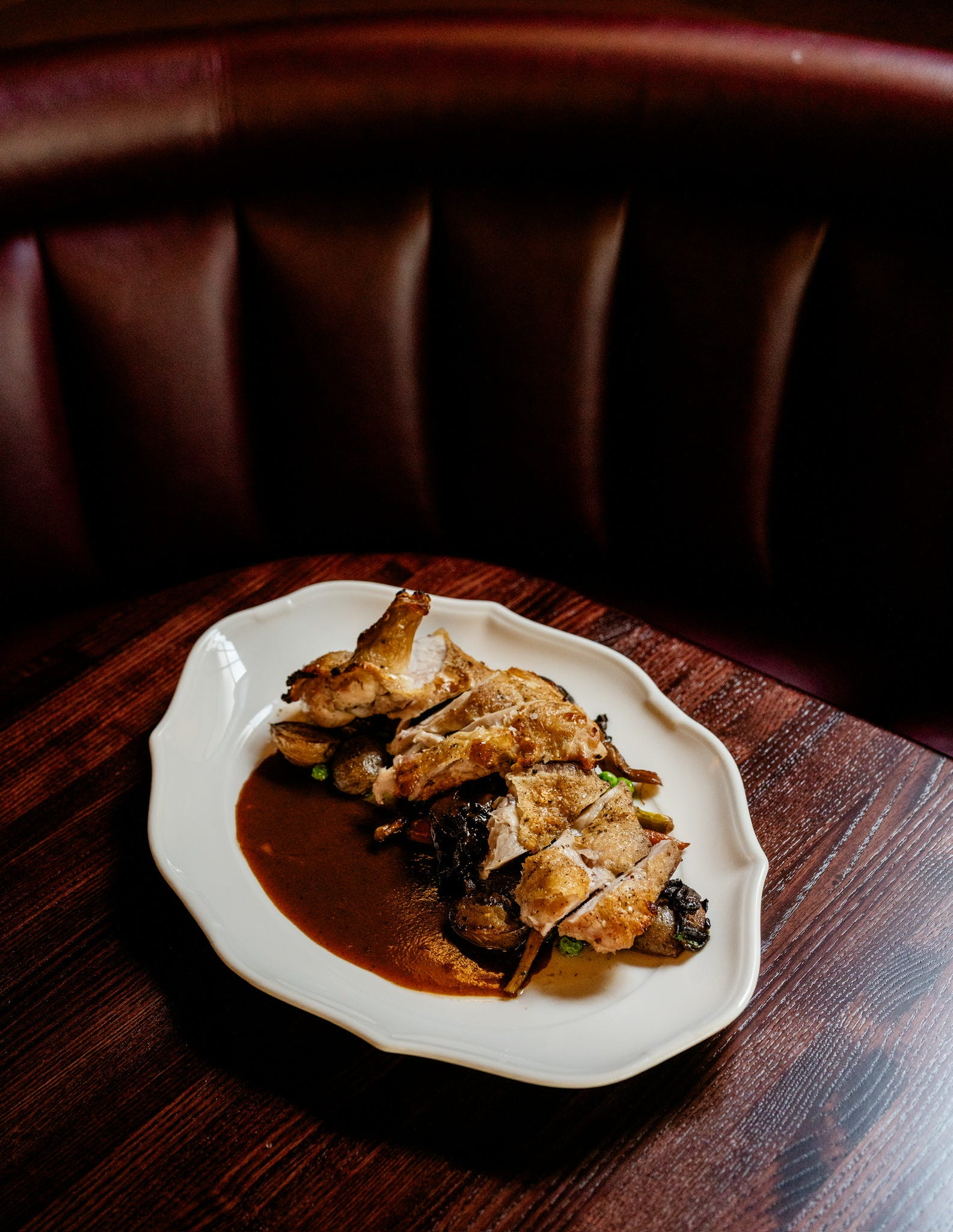
There are two kinds of burgers — griddled double cheeseburger and dry-aged pub burger — infused with trimmings from the in-house butchering.
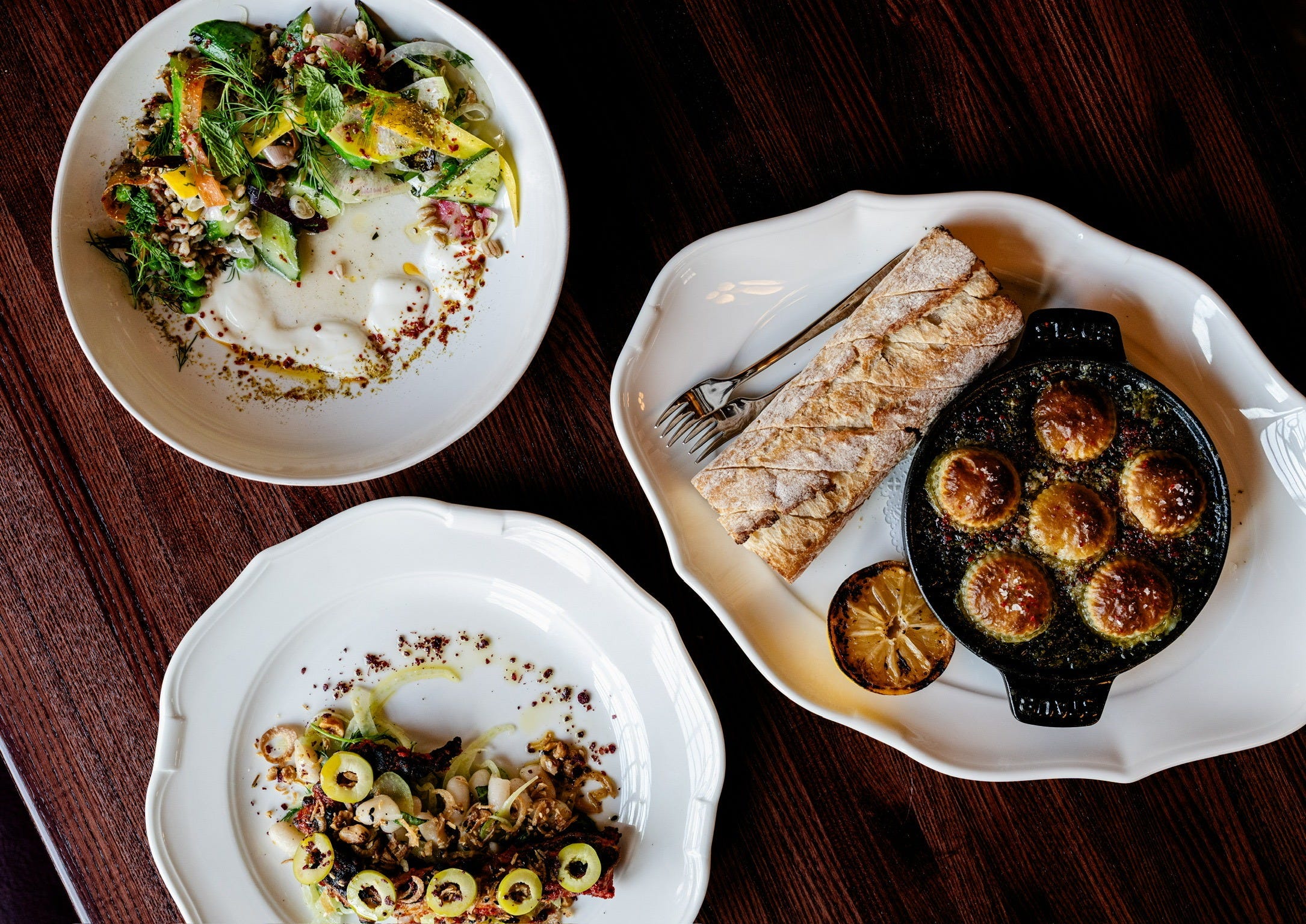
Those trimmings also find their way into the 50-hour veal stock used for Besch’s French onion soup, a recipe he’s perfected over the years. “It actually was his French onion soup that I first fell in love with Johnny’s cooking,” says Abu-Taleb. “Stock work shows a lot about a chef.”
Desserts lean into that not-reinventing-the-wheel approach with classics like profiteroles, sticky toffee pudding and crème brûlée.
Head up the stairs and you’ll be in The Bull Moose. (At the top of the stairs turn around and you’ll be greeted by its namesake hanging on the wall behind you, although the steakhouse was actually named after the brothers’ grandfather, who earned the nickname via a series of fortunate events.)
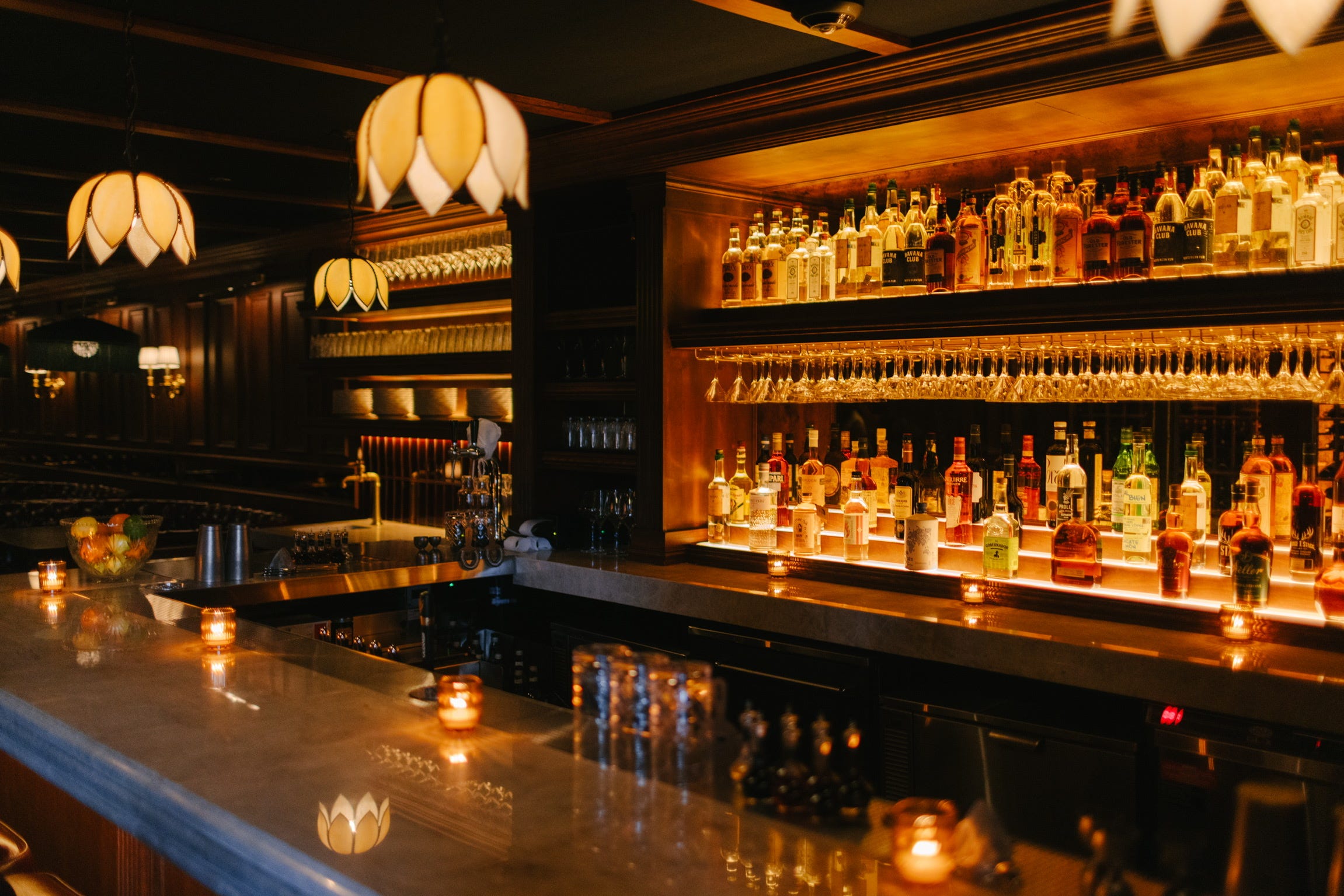
The Bull Moose has seating for 76 via a mixture of cozy booths and tables. There’s a bar, albeit much more intimate than its downstairs sibling with seating for eight. The room shares a similar ambiance as downstairs but with slightly different textures and richer colors. There’s a glass-enclosed wine room as well as two fireplaces on either end of the space.
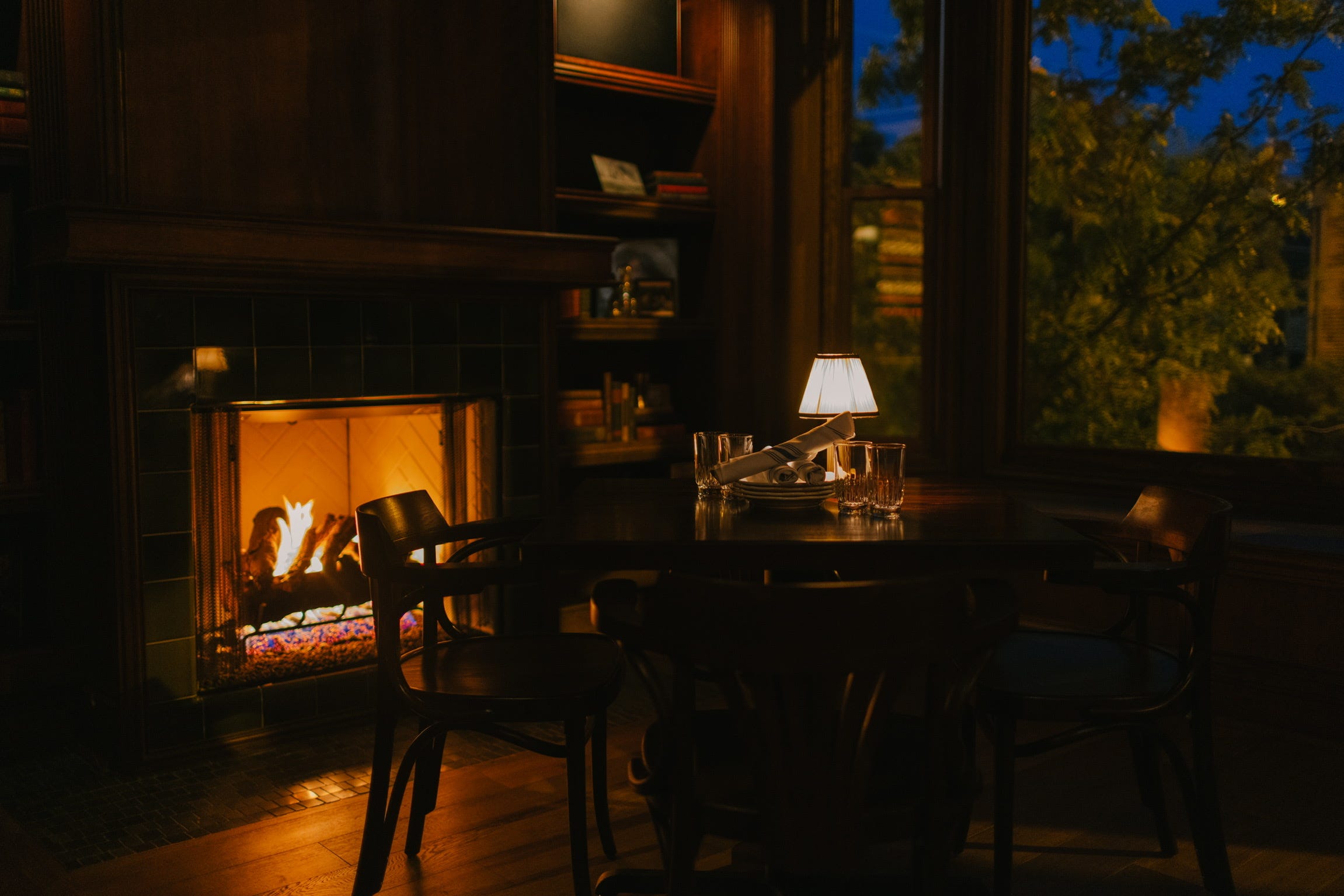
Originally, the idea was to keep the space as apartments and do something on the roof. “There’s probably 500 layouts that we went through here,” says Abu-Taleb. “Plan it, scrap it, plan it. I think if you let the building tell you what to do, you’ll end with better results.”
The steakhouse concept was born with the universal appeal of that style of dining. The challenge came with trying to create one that isn’t limited to special occasions.
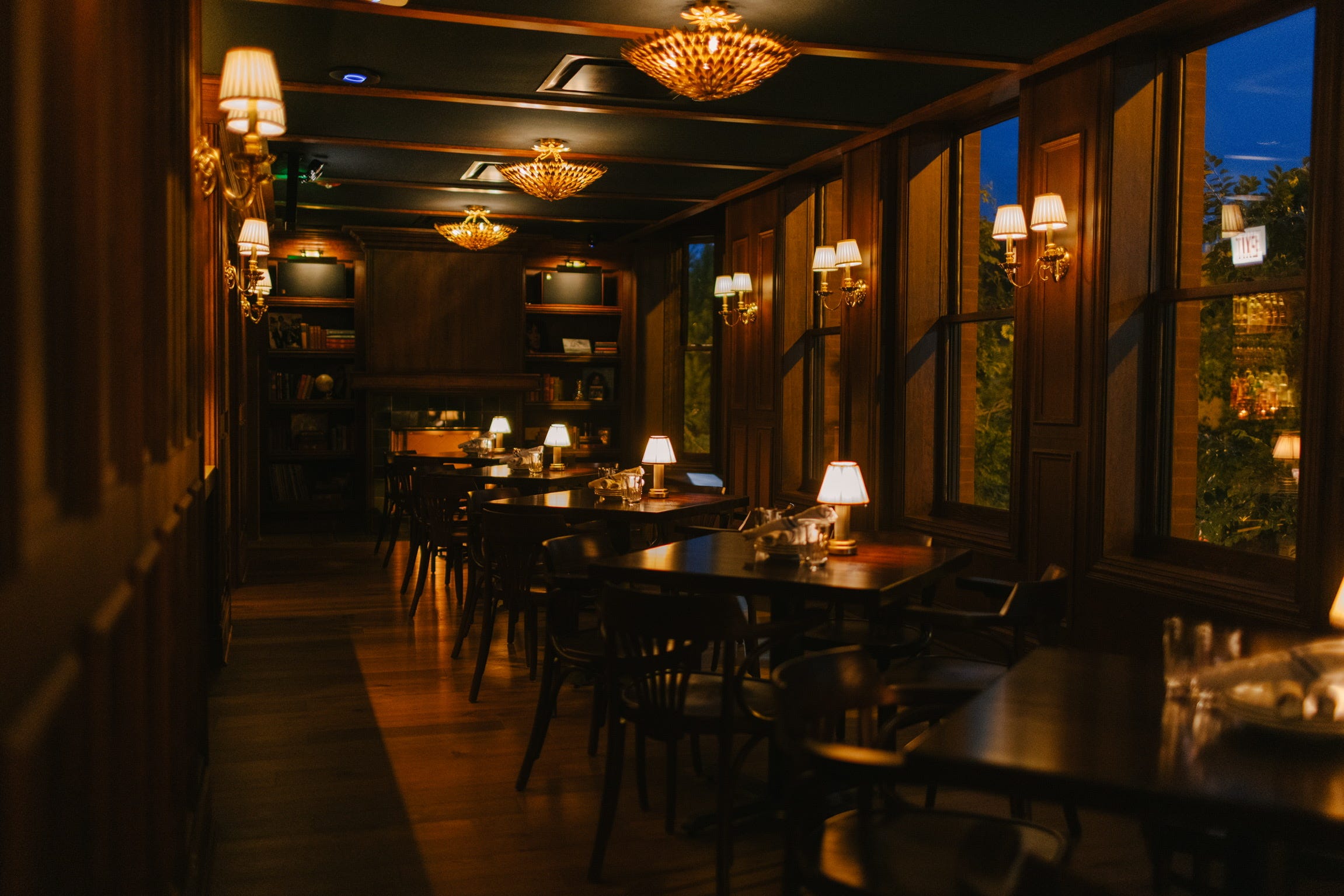
The brothers and Besch approached The Bull Moose with the idea of making it sustainable for them and affordable for the guest. Butchering and dry-aging in-house will help. They also decided to offer the charcoal-roasted steaks and chops in portion sizes meant for sharing. Like in a traditional supper club, they will come with a choice of soup or salad and the rich, pureed potatoes synonymous with French chef Joel Robuchon. There is some menu crossover from Beaumont’s.
“We have inflation fatigue ourselves and we’re pretty cognizant of how we’ve gotten there, especially in restaurants,” says Abu-Taleb. “But we’re trying to find ways we can provide value and do it sustainably, where it’s not just affordable for the first three months, and then we jack up the prices.”
He credits having a chef who’s “plugged into sourcing, has great relationships with vendors and farmers, and is creative enough to be able to find value and provide it.” Adds Besch, “I’m a big ingredient nerd as they’re everything.”
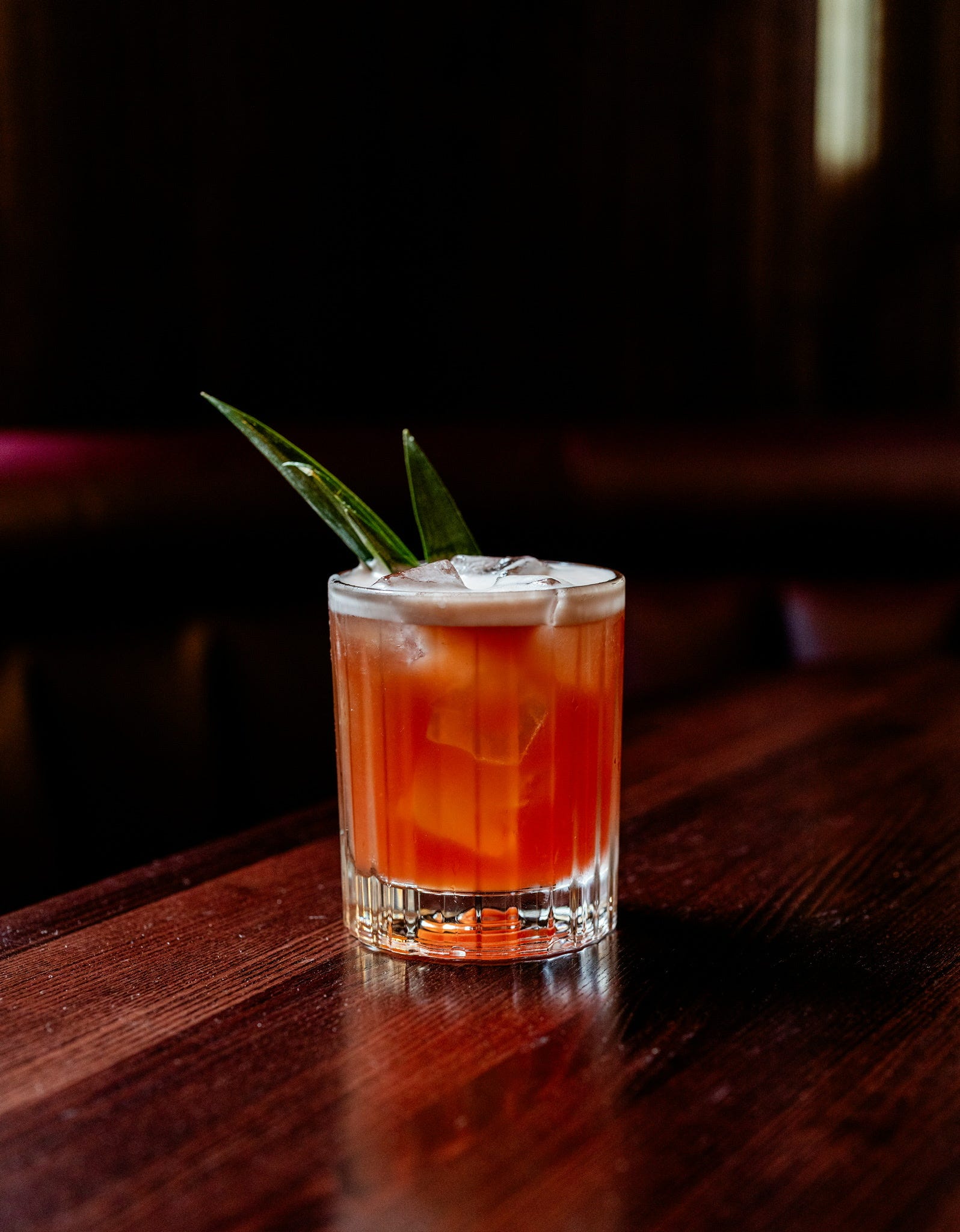
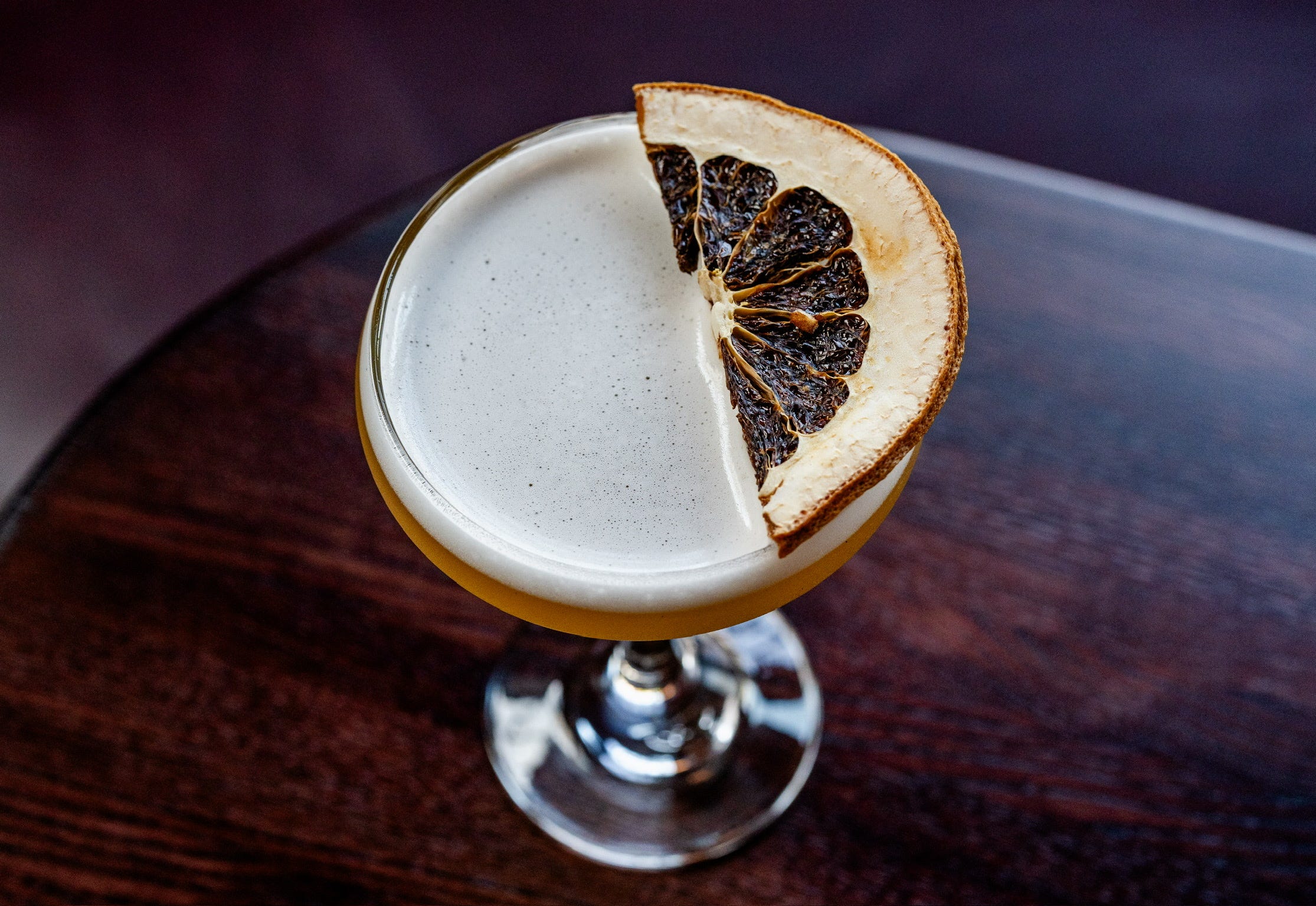
Roger Garcia, an Alderman alum, is leading the restaurants’ beverage program. Like the food, cocktails will embrace classics. “If it hasn’t worked for 50 years, we’re not going to put it on the menu,” says Abu-Taleb. The cocktails range from the iconic — think Old Fashioned and Negroni — to lesser-known ones like the mezcal-forward Yellowjacket and Adonis, a mix of sherry, amaro and vermouth.
Craig Sindelar, who worked with Besch at Bistro Monadnock and Asador Bastian and Alinea previously, leads the wine program, which features about 100 bottles and a by-the-glass menu of 14. “We are trying to bridge the gap gradually into Old World wines,” says Abu-Taleb with value top of mind here too.
Those looking for the ultimate wallet-friendly beverage experience should head to Beaumont’s for happy hour Wednesday through Sunday when all menu cocktails and wines by the glass are just shy of 10 bucks and draught beer is $4.95.
An emphasis on music is another import from Pilsen Yards, which features DJs four days a week. “I’m a big audiophile and I love hi-fi speakers and all that,” says Abu-Taleb. The music at Beaumont’s will lean into ’70s soul and funk. “It’s really more about a groove than anything else,” he adds. DJs are in the works once the restaurant’s acoustics are fine-tuned.
Also on the horizon is brunch with July as a tentative month for its debut.
When it came to naming the restaurant, it was a no-brainer. “That name is attached to this address and to this building,” says Abu-Taleb. “So many generations of Chicagoans knew the Beaumont and loved it.” Since opening, Abu-Taleb and Besch have had many people tell them they met their spouses there.
“We feel that a huge part of what draws people to restaurants is nostalgia and familiarity and we’re not really interested in chasing trends as tried and true is kind of our orientation,” added Abu-Taleb. “The more that the space and concept is an extension of the people behind it, I think the truer it will ring to the guest and to the staff and it just develops a stickiness that people are drawn to.”
People are a big part of Beaumont’s. Head to its website and you’ll find not only the usual top folks mentioned but all those involved in the nuts and bolts of its resurrection in The Project section. Then there’s the staff.
“There are so many things to be proud of about this build, but if we didn’t find the group of talented people that we have found we’d be dead in the water,” says Besch. “It was an emotional thing to get people in the room because at the end of the day, it’s just four empty walls no matter how finished it is. It’s kind of a graveyard at that point until you put souls in it.”
“We don’t see it a lot, but it’s just staggering the amount of people that are required to make a sketch a reality and that’s before you unlock the door,” adds Abu-Taleb. “But to Johnny’s point, you cannot have a great restaurant without great people.” Leaning into that mindset, this project debuted the launch of Chicago-based Bull Moose Hospitality.
“The best feedback I’ve heard is that Beaumont’s is what the neighborhood needed,” says Abu-Taleb. “Because that’s really how we approach projects is studying the neighborhood and providing it with what it needs and maybe a little bit of what it didn’t realize it wanted.”
Beaumont’s Is open now. The Bull Moose opens on July 1st. Both are located at 2020 N. Halsted in Chicago
 | A guest post by
|
Welcome back Lisa! Happy Johnny Besch wasn’t gone from the kitchen too long!!!
I like the idea of letting the building tell you what it wants to be, rooting it in a specific address.
Most restaurant concepts these days feel as though they could be dropped into any city.